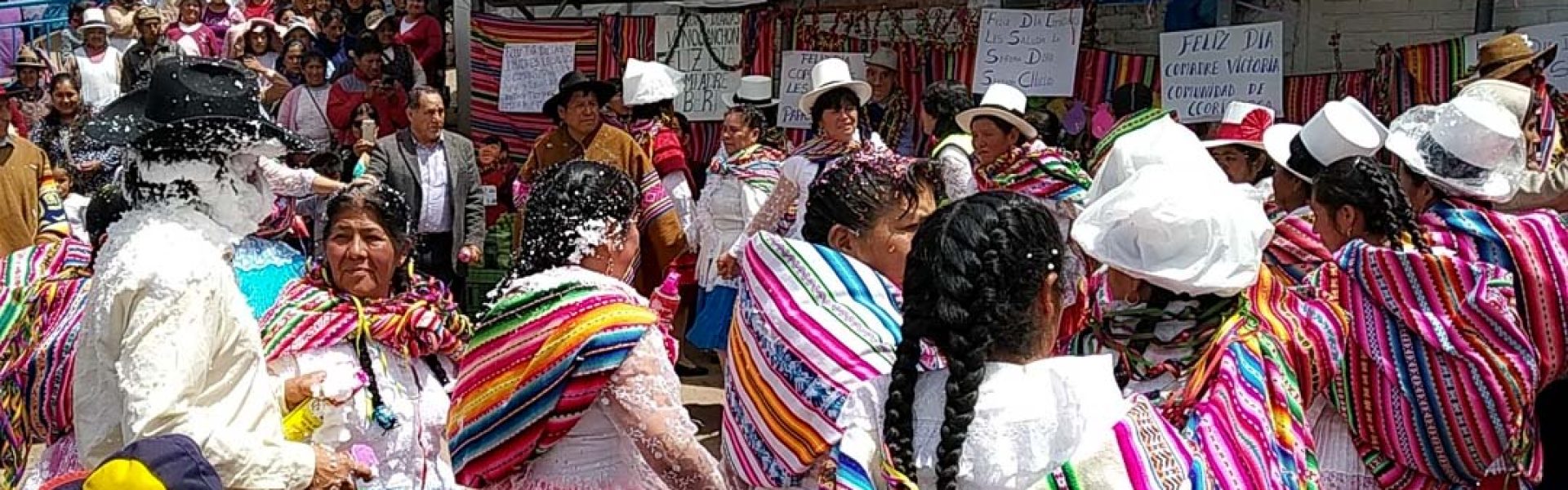
Carnivals in the Peruvian Andes fill the streets with color and joy, where music, dancing, and laughter celebrate life. Through games, dances, and songs steeped in ritual, the tradition honors Pachamama, thanking her for the fertility of the land, the harvests, and the abundance that unites the community in a celebration that vibrates with culture, identity, and festive spirit.
The explosion of color, music, and joy reflects in its people the deep culture of each town, each idiosyncrasy, and each cultural ideology. Between dances, songs, and games with water and flowers, tradition is kept alive as an ancestral heritage passed down from generation to generation, thus uniting the people of all communities in a spirit of reciprocity, identity, and celebration of life.
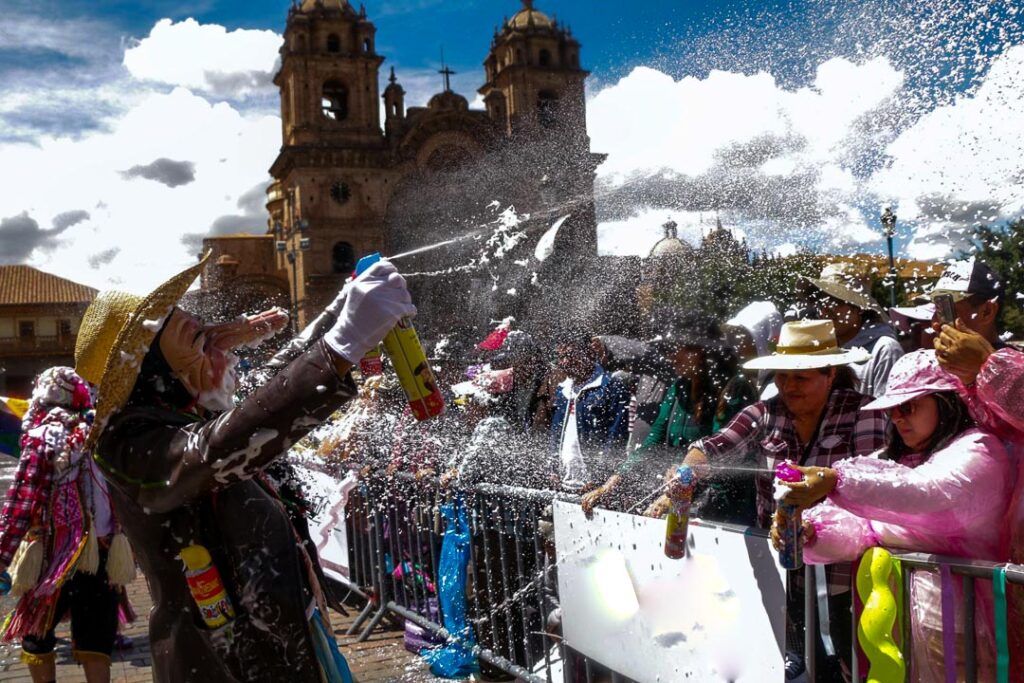
This traditional festival, celebrated between January and March, showcases colorful dances and games accompanied by water and talcum powder. The celebrations begin with the fiesta de compadres y comadres (godparents’ party), the main day is always celebrated on a Sunday, and seven days later, the octava or farewell party is held.
ORIGIN OF CARNIVALS IN PERU
Carnivals in Peru have a historical and cultural origin that stems from the fusion of pre-Hispanic Andean traditions and customs brought by the Spanish during the colonial era. Before the arrival of Europeans, Andean civilizations already performed rituals and festivities linked to the agricultural cycle, especially during the rainy season, when the land became fertile and Pachamama was thanked for the abundance of crops. These celebrations included dances, songs, offerings, games, and community rituals that celebrated life and nature.
With the Spanish conquest in the 16th century, these ancestral practices were mixed with the European carnival, a festival associated with the Christian calendar that precedes Lent. The Spanish introduced new forms of celebration such as parades, the use of masks, satirical humor, and water games. Far from disappearing, Andean traditions adapted and gave new meaning to these elements, giving rise to a unique carnival that is diverse and deeply rooted in Peruvian identity.
Over time, each region of Peru developed its own way of celebrating carnival, reflecting its history, geography, and culture. In the Andes, carnival retains a strong ritual and community character, where music, dance, traditional food, and celebrations such as the yunza symbolize fertility, reciprocity, and the continuity of life. On the coast and in the jungle, carnival adopted more festive and urban expressions, without losing its popular and joyful essence.
Today, carnivals in Peru represent one of the country’s richest cultural expressions. They are a celebration of identity, memory, and cultural resistance, where the ancestral and the colonial coexist in a festival full of color, music, and joy. To experience the Peruvian carnival is to understand how history, Andean spirituality, and cultural diversity intertwine to celebrate life and the union of people.
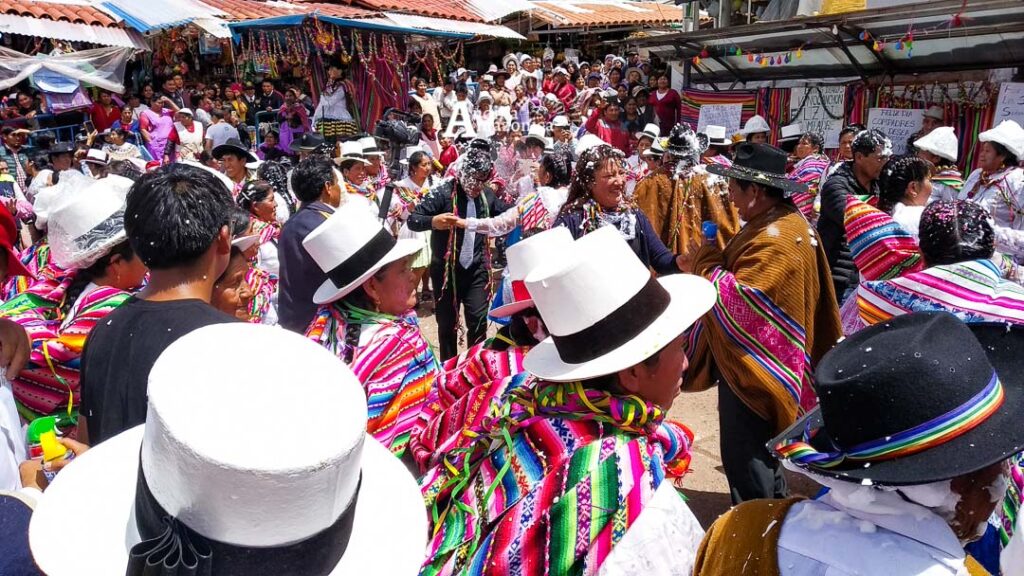
CARNIVALS IN CUSCO
The Carnival festival in Cusco is one of the most joyful, colorful, and eagerly awaited celebrations on the Andean festive calendar. It takes place mainly between February and March, when the towns and neighborhoods of Cusco fill with music, laughter, and games involving water and foam, expressing gratitude to Pachamama for the fertility of the land and the abundance of the harvests. During these days, collective joy breaks the routine and unites children, young people, and adults in an atmosphere of brotherhood, where sharing is as important as celebrating.
Carnival cuisine is another major highlight. Traditional dishes such as puchero or t’impu (a hearty broth with meat, tubers, and vegetables) are prepared especially for this season. Delicacies such as chancaca, sank’u, and traditional drinks that comfort the body and spirit are also enjoyed, shared with family or neighbors as a symbol of hospitality.
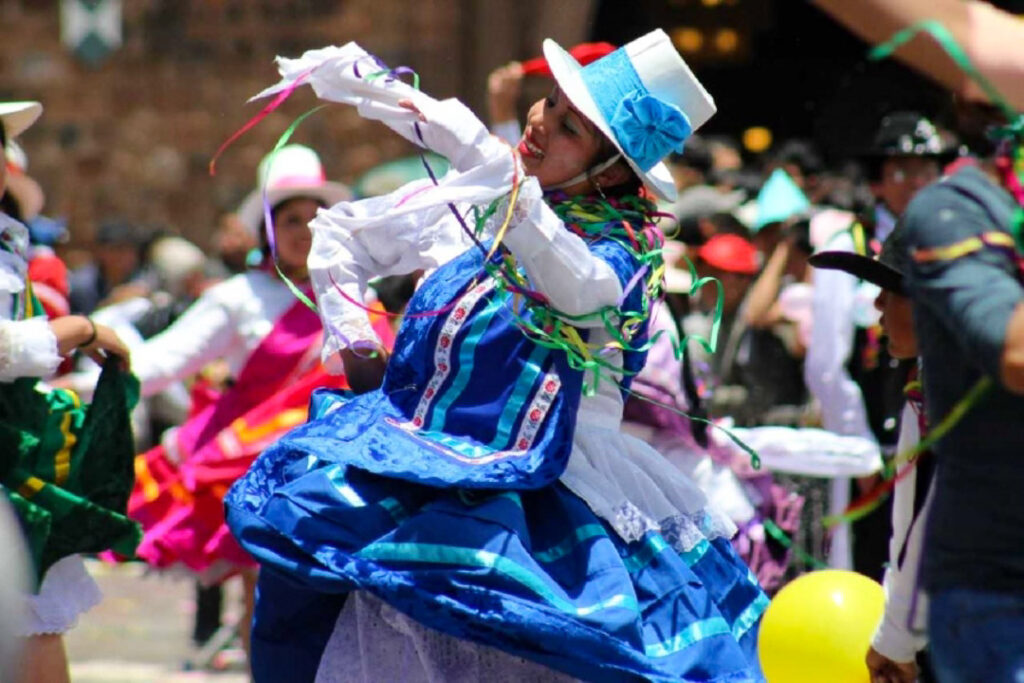
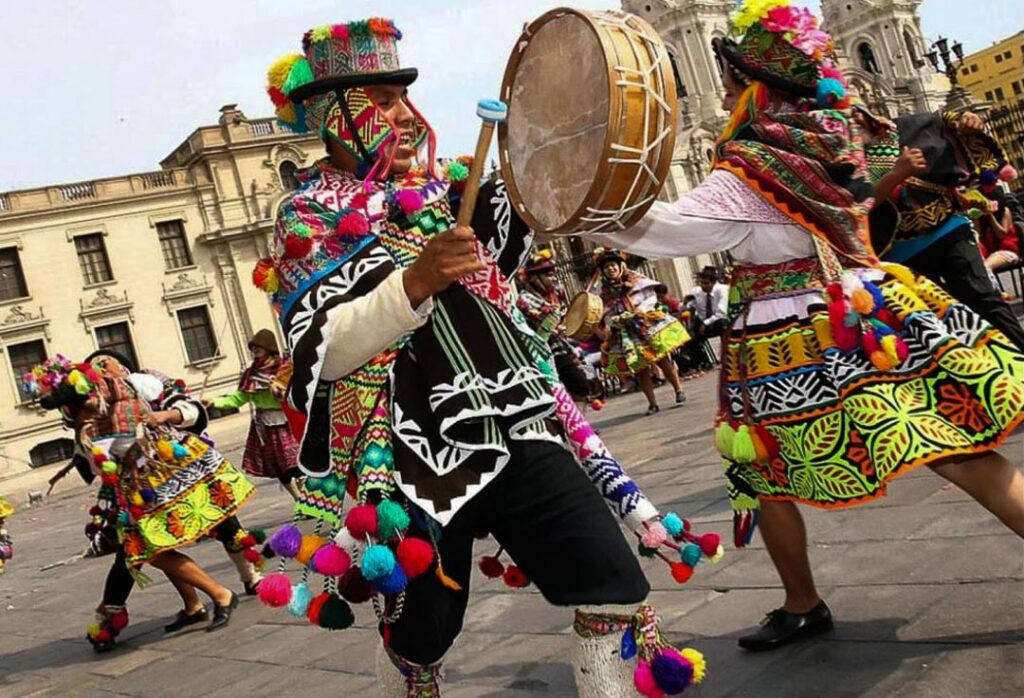
Dance and folklore fill the streets and squares with troupes dressed in colorful costumes and festive masks. Carnival dances, accompanied by instruments such as quenas, charangos, and drums, express joy, satire, and a connection with nature. Each movement and melody reflects the Andean cultural identity, passed down from generation to generation as a living legacy.
Taken together, the Carnivals in Cusco are not just a party, but a profound cultural experience where Andean spirituality, tradition, flavor, and celebration come together. It is a time when Cusco shows its most authentic essence: a people proud of their roots, celebrating life with joy, respect for nature, and a strong sense of community.
DANCES & MUSIC AT CARNIVALS
The dances and music of carnival in the Peruvian Andes are a vibrant expression of joy, identity, and ancestral heritage. During this festive season, towns and communities are filled with color, rhythm, and movement, celebrating life, the fertility of the earth, and community unity. The Andean carnival is not just a party, but a collective ritual where music and dance play a fundamental role in expressing gratitude to Pachamama and renewing social ties.
Carnival dances are characterized by energetic movements and collective choreography, where men and women dance in circles, rows, or troupes. Among the most representative are the Cusco carnivals, the Ayacucho carnival, the puqllay, and various local dances that vary according to the region. The steps are usually agile and playful, accompanied by jumps, turns, and gestures that symbolize courtship, abundance, and harmony with nature. The costumes, full of embroidery, flowers, and intense colors, reflect the cultural diversity and pride of each community.
Andean carnival music is joyful and contagious, played with traditional instruments such as the quena, charango, zampoña, bombo, and Andean violin. The songs, often in quechua and Spanish, tell stories of love, work, daily life, and celebration, inviting everyone to participate. The festive rhythm encourages singing, dancing, and sharing, turning each gathering into a collective experience of excitement and brotherhood.
Together, the dances and music of carnivals in the Peruvian Andes represent the essence of the Andean spirit: communal, joyful, and deeply spiritual. To experience this celebration is to connect with a living tradition, where every melody and every dance step celebrates cultural identity, nature, and the continuity of a legacy that remains strong through time.
COMPADRES DAY (Godfather Day)
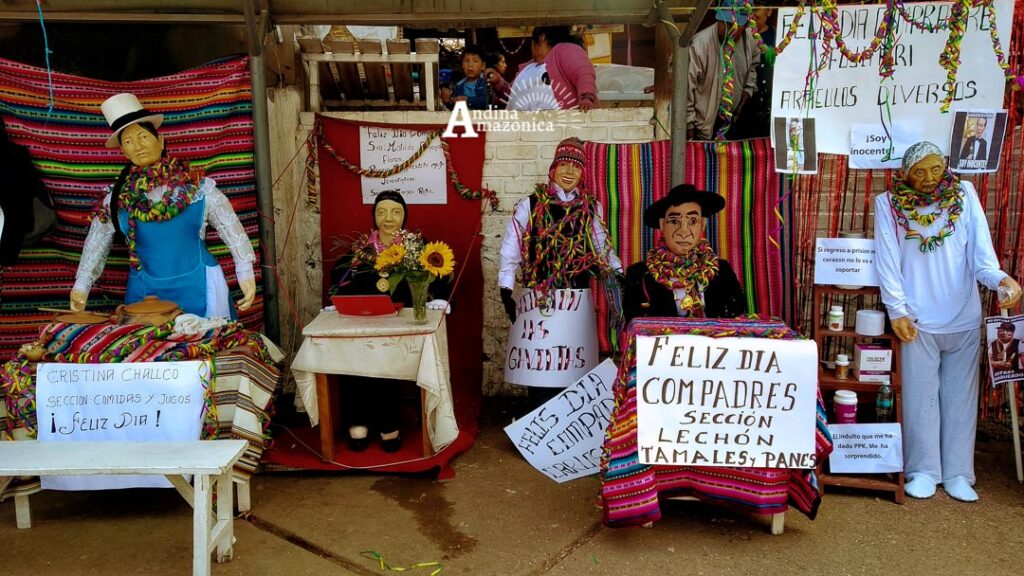
Compadres Day is one of the most eagerly awaited and colorful festivities that mark the official start of Carnival in Cusco. This celebration, which takes place on the Thursday before Comadres Day, combines humor, satire, and tradition, turning the streets and neighborhoods of Cusco into scenes of joy and fellowship. It is a day dedicated to friendship, compadrazgo (godparenthood), and the festive spirit that characterizes Andean culture.
During this day, the compadres make and display handmade dolls made of rags, cardboard, or old clothes, which represent popular characters, everyday situations, or social criticism with a touch of burlesque. These dolls are hung on balconies, poles, and in squares, accompanied by witty signs and humorous messages that provoke laughter among neighbors and visitors. Music, dancing, and games with water, talcum powder, and streamers complete the carnival atmosphere.
Beyond the fun, Compadres Day has a deep cultural and social significance. It strengthens bonds of friendship and reciprocity within the community, keeping alive a tradition passed down from generation to generation. In Cusco, this festival is an authentic expression of identity and popular creativity, where humor becomes a form of collective unity and celebration, announcing that the carnival season has begun with Andean joy and pride.
COMADRES DAY (Godmother Day)
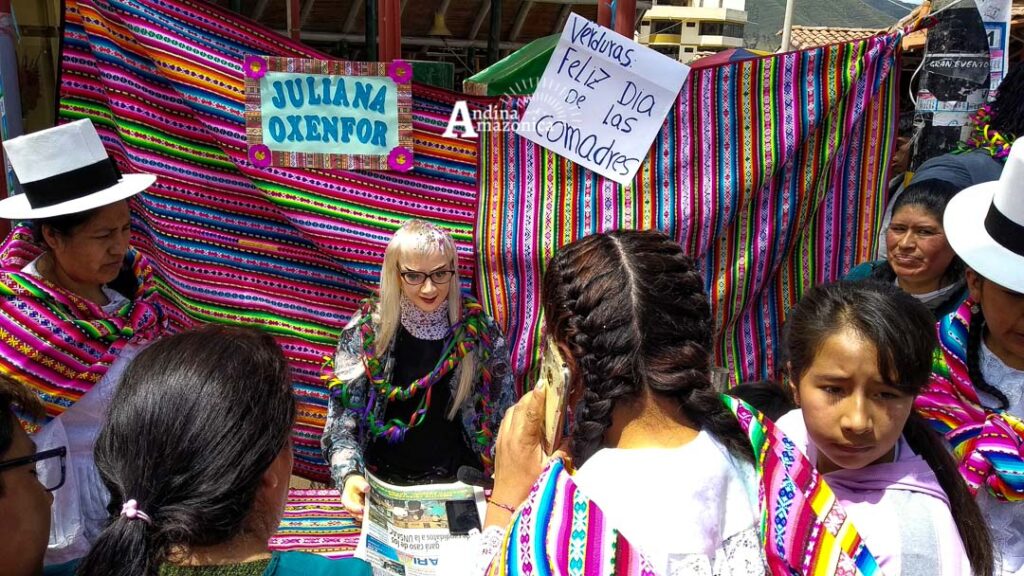
Comadres Day is a beloved traditional celebration in the city of Cusco and an essential part of the Andean Carnival calendar. It is celebrated on the Thursday after Compadres Day and is dedicated to highlighting friendship, sisterhood, and complicity among women. On this date, joy is experienced in neighborhoods, markets, and squares, where color, music, and humor fill the festive atmosphere.
One of the most representative customs of Comadres Day is the creation of handmade dolls, made from fabric, straw, and recycled materials, which symbolize female characters or everyday scenes with a satirical and creative tone. These dolls are displayed on balconies and in public spaces, accompanied by funny messages that reflect the mischievous spirit of Cusco. The comadres also share traditional foods and drinks and participate in games with water, talcum powder, and streamers, strengthening community spirit and the carnival atmosphere.
Beyond the celebration, Comadres Day has a profound cultural and social value. It represents respect, solidarity, and the fundamental role of women within the Andean community. This tradition, passed down from generation to generation, reaffirms Cusco’s identity and marks the prelude to the main days of carnival. To experience Comadres Day in Cusco is to experience a festival full of color, tradition, and unity, where culture is celebrated with pride and joy.
GASTRONOMY, ENJOYING THE BEST TRADITIONAL CARNIVALS DISH: “PUCHERO”
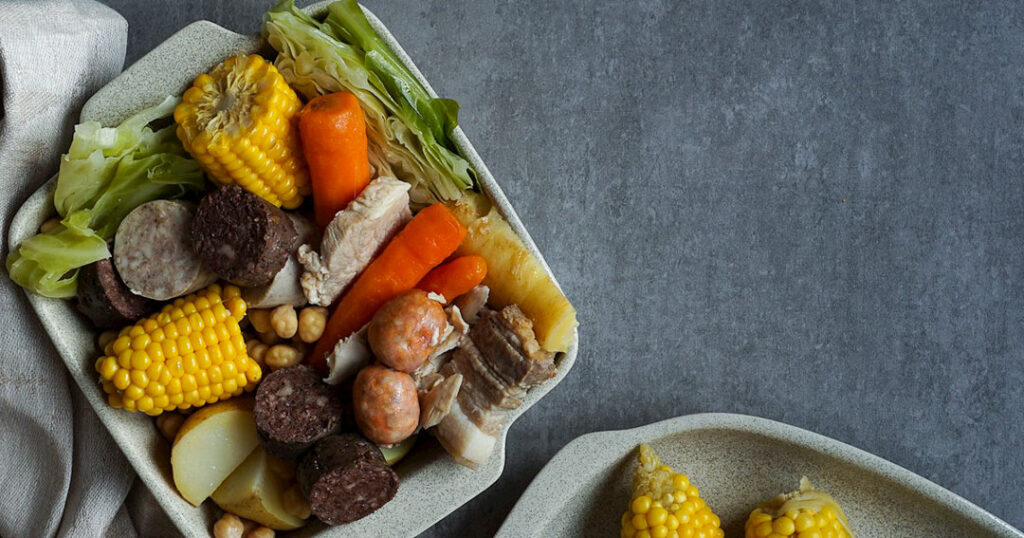
Cusco’s puchero, also known as “Timpu,” is one of the most traditional and eagerly awaited dishes during the Carnival season in Cusco. This ancient stew represents abundance, family unity, and celebration, and is often shared at large gatherings where joy, music, and games with water and talcum powder fill the streets. Prepared with patience and love, puchero is much more than food: it is a living expression of Andean identity.
Its preparation includes a generous variety of ingredients that symbolize the richness of the Cusco region: meats such as beef, lamb, pork, and chicken; Andean tubers such as potatoes, yucca, and sweet potatoes; grains such as chickpeas; vegetables such as cabbage, carrots, and leeks; as well as the ever-present peaches and pears, which add a characteristic sweet touch. Everything is cooked slowly until a hearty, flavorful broth is achieved, which comforts the body after the celebrations.
During carnival, puchero is traditionally served at midday, accompanied by white rice and hot chili peppers, and enjoyed with family or friends, strengthening bonds and traditions. This dish reflects the festive spirit of Cusco: generous, colorful, and deeply linked to the Andean worldview, where food is a way of thanking Pachamama and celebrating life. To taste a puchero during Carnival is to experience Cusco in its most authentic essence.
LA YUNZA (Dancing around the tree to cut it down)
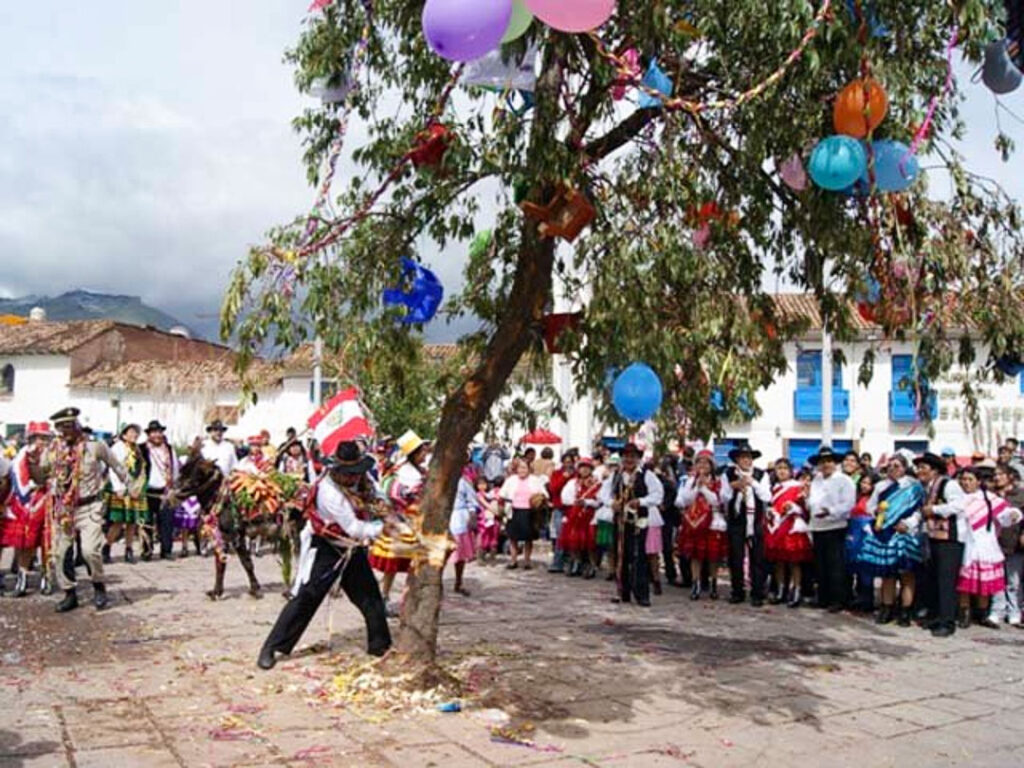
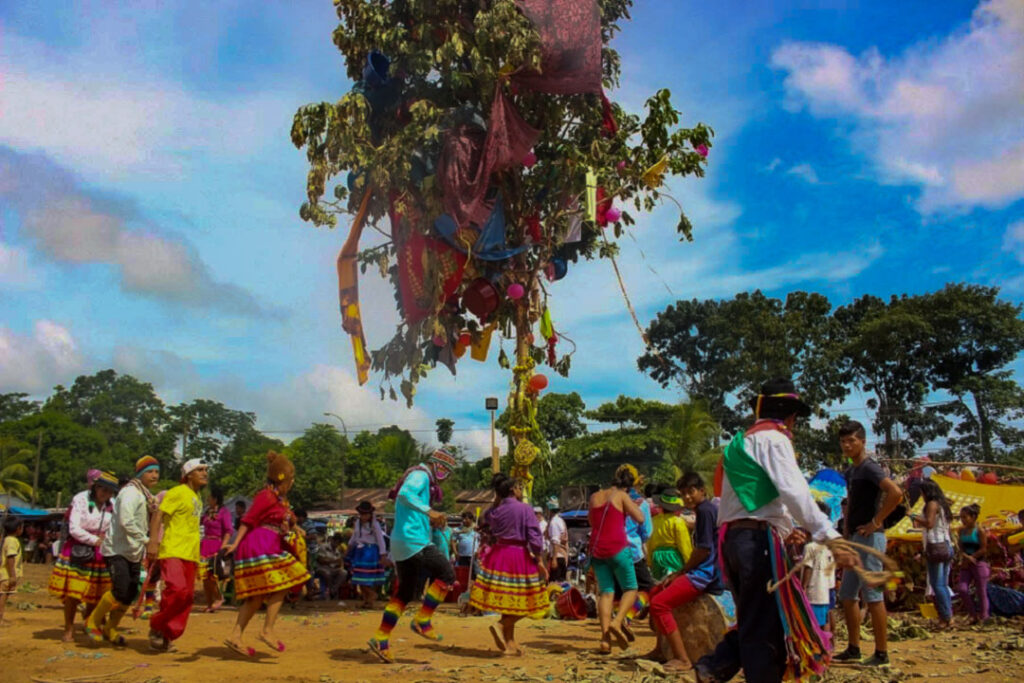
La yunza, also known as the “Corta Monte,” is one of the most joyful and symbolic traditions of Carnival in Cusco. This ancestral celebration brings together families, friends, and entire communities around a tree decorated with gifts, balloons, streamers, and products of the earth, becoming the heart of the carnival festivities. La yunza is not only fun, but also a profound expression of gratitude, reciprocity, and social unity in Andean culture.
The ritual begins with the selection and decoration of the tree, which represents fertility, abundance, and connection with Mother Earth. To the rhythm of huaynos and traditional music, participants dance in a circle while taking turns cutting the trunk with an axe or machete. Each blow is accompanied by laughter, singing, and games with water and talcum powder, creating an atmosphere of collective joy. When the tree finally falls, everyone rushes to collect the gifts, symbols of prosperity and good omens for the year.
Beyond the celebration, the yunza has a strong community value: whoever strikes the last blow becomes the godfather or godmother of the next yunza, assuming the commitment to organize the following year’s celebration. This act reinforces the Andean principles of solidarity and cultural continuity. Experiencing the yunza during the Cusco carnival is to experience a living tradition, full of color, music, and spirituality, where the festival becomes an act of celebration of Andean life and identity.
THE “CHICHA” (Corn Andean Beer)
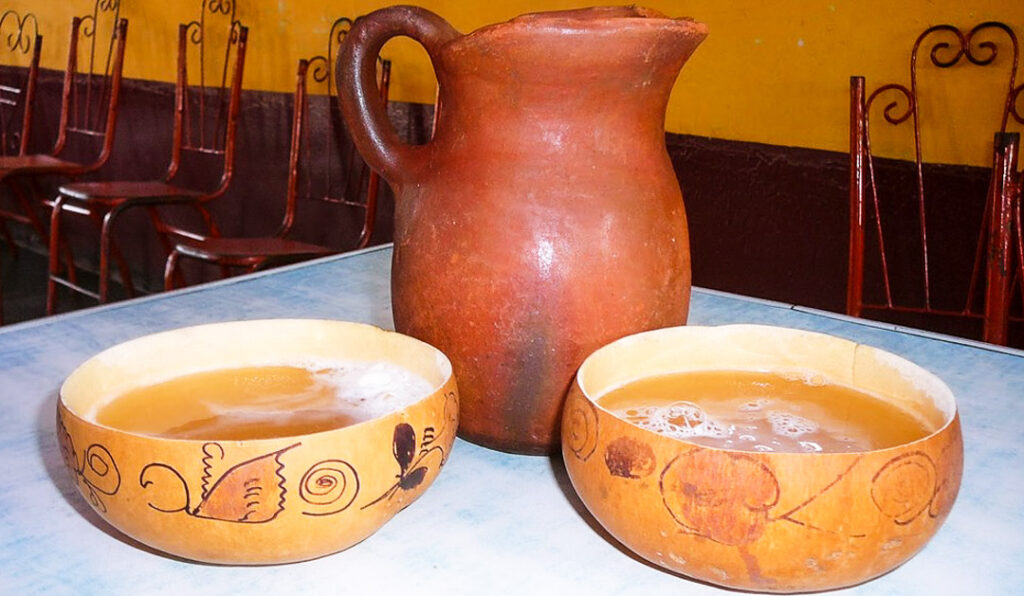
The popular “chicha,” especially chicha de jora, is an ancient drink deeply rooted in Andean culture and everyday life in Cusco. Its preparation begins with yellow corn (jora), which is left to germinate naturally for several days until it sprouts. It is then dried in the sun and ground. This ground jora is boiled in large clay pots with plenty of water for several hours, stirring constantly with a wislla (wooden stick), until all its flavor and starch is extracted.
Once cooked, the mixture is strained through a straw basket to separate the liquid from the solid residue. The resulting liquid is left to ferment naturally in clay jugs for one or several days, depending on the desired intensity. During fermentation, chicha acquires its characteristic slightly acidic flavor, intense aroma, and symbolic value, as it is considered a sacred drink, offered to Pachamama and present in rituals, festivals, and community gatherings.
Chicha contains nutritional properties and health benefits such as:
• Energy and digestive value: Thanks to germinated corn (jora) and its fermentation, it provides probiotics that improve intestinal flora.
• Minerals: It is notable for its iron (oxygen transport) and magnesium/calcium (bone health) content.
• Vitamins: It provides vitamins essential for cellular metabolism.
• Diuretic Properties: It eliminates toxins and promotes kidney function.
• Other uses: It is traditionally considered to stimulate breast milk production.
It is a natural and ancient alternative that works as an energy supplement in the daily diet.
THE “FRUTILLADA” (Corn & Strawberry Andean Beer)
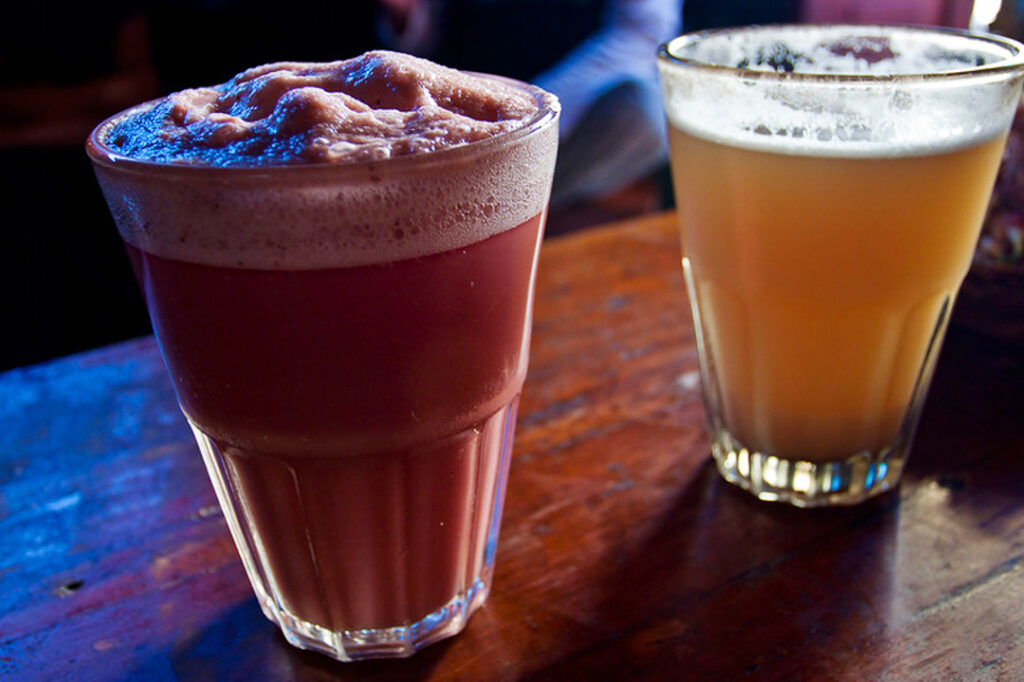
Frutillada is a sweet and refreshing variation of chicha, very popular in traditional chicherías in Cusco. It is made from fermented chicha, to which fresh strawberries, previously washed and crushed, are added, along with sugar or chancaca to taste. Some family recipes also include cloves or cinnamon, giving it a special aroma.
The mixture is left to rest for a few hours so that the flavors blend together, resulting in a drink with an intense pink color, light foam, and a balanced sweet, tart, and fruity flavor. Frutillada is served cold, usually in large glasses, and is a symbol of joy, celebration, and living tradition, accompanying popular festivals, carnivals, and social gatherings.
The nutritional value of strawberries is characterized by the calories they provide, more than 90% water, carbohydrates (natural sugars), fiber, proteins, fats (very low), vitamins C (more than oranges), A, E, B1, B2, B3, and B6, and minerals such as potassium, calcium, magnesium, iron, phosphorus, and iodine.
Some of the main benefits of strawberries:
• High antioxidant power: Anthocyanins protect cells and prevent aging.
• Cardiovascular health: Helps reduce high blood pressure and cholesterol.
• Natural diuretic: Recommended for people with gout or high uric acid.
• Immune booster: Excellent source of vitamin C for the immune system.
THE KACHARPARI (Farewell to the Carnivals Celebrations)
El Kacharpari, a Quechua word meaning “Farewell,” is the celebration that marks the official end of the Andean carnivals in the city of Cusco and in many communities in southern Peru. This festival, also called Octava de Carnavales, takes place eight days after the central Sunday of carnival and represents a moment of collective joy, gratitude, and spiritual renewal, deeply rooted in the Andean worldview.
The festival revolves around the yunza or corta-monte, a tree decorated with gifts, balloons, streamers, fruits, and colorful objects. Around it, families, neighbors, and visitors gather to dance to the rhythm of huaynos and Cusco carnival music, while sharing food, chicha, and frutillada. Each pair of dancers strikes the trunk with an axe, and whoever makes the last cut takes on the responsibility of organizing the following year’s celebration, thus strengthening community ties and the principle of ayni (reciprocity).
The Kacharpari is also steeped in spiritual symbolism. Before the festival begins, it is customary to make an offering to Pachamama, giving thanks for the harvests, abundance, and protection provided throughout the year. The tree represents life, fertility, and the connection between humans and nature, while the act of cutting it down symbolizes the end of one cycle and the beginning of another.
During the Octava de Carnavales, the streets and squares are filled with music, parades, picaresque songs, and games with water, talcum powder, and flowers, expressions inherited from ancient agricultural traditions and purification rituals. Traditional cuisine also plays a central role, with dishes such as suckling pig, baked guinea pig, Timpu, and other regional stews shared as a sign of unity and hospitality.
More than just a party, Cusco’s Kacharpari is a living manifestation of cultural identity, where the festive, the spiritual, and the communal come together. It is a time to bid farewell to the carnival season with gratitude, reinforce ancestral memory, and celebrate life in harmony with the earth, keeping alive the traditions that have been passed down from generation to generation.